
Fair Laws.Safer Neighborhoods.Stronger Futures.
There’s a clear gap in California law.
Two people who commit similar crimes at the same age can end up with completely different futures – not because of their actions or who they are after decades or rehabilitation.
A narrow fix in existing law would close the gap and create the same opportunity for those who have been arbitrarily excluded.
Fairness should be the standard.

Fairness
Numerous California Supreme and Appellate Court Justices question the constitutionality of sentencing youth aged 18 through 25 to life without parole. They have called upon legislature to correct the law.
Safety
99.5% of people sentenced to life without parole who later parole due to a change in their case never go on to commit a violent crime. California's rigorous parole hearing process protects public safety.
Community
Research overwhelmingly finds that people once sentenced to life without parole contribute to their communities when released, driven by profound remorse for the harm they caused at a young age, and their desire to give back.
Science
Neuroscience shows the human brain continues to develop in important ways through the mid-twenties. Given the opportunity, young people are especially capable of rehabilitation as they mature and grow.
California voters agree that two people who commit the same crime should get similar sentences. It's only fair. However, that's not how this California law works.

In California, more than 5,000 people are serving life without the possibility of parole.
52% of these LWOP convictions were for a crime where the person didn't intend for anyone to die, like robbery, but someone else directly caused the death.
Racial disparities in California’s criminal system are greater the younger the person is. Black and Brown people between 18 and 25 years of age are disproportionately sentenced to LWOP at astonishing rates— in California, approximately 86% of young people sentenced to LWOP are people of color.
California imposes LWOP arbitrarily. The sentence is not reserved for the most extreme cases, and research shows that the crimes of young people sentenced to LWOP are likely no worse than those of people who get a 25-to-life sentence.
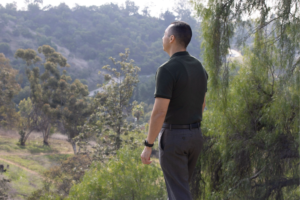
Giving Back
Research examining the lives of 110 people who were sentenced to LWOP in California but later released found the vast majority of are volunteering in their communities, caring for family members, and mentoring youth.
70% said they have stepped into a healthy adult role in the life of a young person.
84% reported financially assisting other people since being released from prison.
94% reported volunteering with charities, community organizations, or nonprofit organizations since release.
An effective, proven process is already in place
California has one of the strictest parole standards in the country.

Exceptionally Rigorous Parole Process
ONLY 11%
of eligible people are granted parole
Exceptionally Low Recidivism
0.7%
of people released through the parole hearing process went on to commit any felony against a person
Testimonials

Jarrett
Jarrett grew up in the California foster care system and, after experiencing unimaginable trauma and abuse, at age 16 took the life of his abuser to protect himself and his younger brother. He was sentenced to life without parole. He spent the next two decades in prison working to transform his own life and helping change the lives of other men in prison who had the opportunity to get out. He became eligible for parole in 2012 due to changes in law that recognize young people should not be sentenced to life without the possibility of parole but instead have a chance to show that they have matured and changed. In 2019, he was granted parole after proving his change to the Parole Board. Today, Jarrett is a criminal justice and foster care reform advocate, working to stop life sentences for children, develop better rehabilitation resources for those returning to society, and put an end to the foster care-to-prison pipeline.

Michele
Michele was sentenced to life without the possibility of parole (LWOP) in 1991. She served 30 years at the world’s largest women’s prison in California until being granted a governor’s commutation. She was released in 2021 and now supports people in reentry and advocates for the rights of those serving LWOP sentences. Today, she works as a Data Quality and Compliance Specialist for Urban Alchemy (UA), a nonprofit that addresses homelessness and community well-being by leveraging the experiences of individuals who have been incarcerated. Her work supports UA’s mission to transform urban spaces and provide vital services to unhoused individuals through effective outreach and community engagement. She is an author and a prison reform advocate who continues to champion her community members who are still serving LWOP sentences.
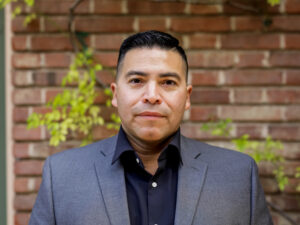
Paul
Paul is a community leader, justice reform advocate, and co-founder of Unlocked Futures. Appointed as a Juvenile Justice and Delinquency Prevention Commissioner and selected as a State Delegate for the Democratic Party, he has dedicated his life to advancing equity and second chances for youth. A husband, father, and homeowner, Paul is deeply rooted in his community and committed to strengthening it through service and collaboration.
At age 17, Paul was tried as an adult and convicted of murder under the felony-murder rule, despite not committing the act himself. He served 25 and a half years in prison, including 12 years in solitary confinement. The law under which he was convicted has since been abolished for youth in similar circumstances. Throughout his incarceration, Paul demonstrated extraordinary resilience and personal growth.
Since his release, he has pursued higher education at Cañada College and is now working toward a law degree. A proud member of Project Change, Paul partners with agencies, faith communities, and local organizations to promote acceptance and opportunity for all youth—regardless of past mistakes—helping reshape societal norms through compassion, accountability, and hope.
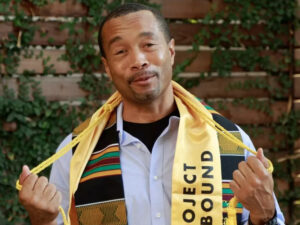
Allen
Allen was arrested in 1992 at the age of 18, convicted of murder, and sentenced to life without parole. His transformation to purposeful living began by taking responsibility for the harm he had caused and being honest with himself and others. More than 25 years later, a California Governor recognized Allen’s dramatic change and commuted his sentence. Allen was released after going through the parole process in June 2020. He spent 28 years in prison. Today, Allen is the co-founder and executive director of The Prism Way, a community-based organization focused on re-entry, behavioral health, and self-development for justice-involved individuals. He is also a consultant for Parole Justice Works, a member of the Transformative In-prison Workgroup’s leadership team and an advisory board member of Theatre Workers Project community-based organizations.
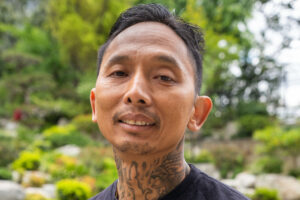
Dara
Dara was sentenced to life without the possibility of parole at 19 years old. Over the next 20 years, Dara obtained his GED, followed by his bachelor’s degree in communications from California State University, Los Angeles. His exceptional efforts to change his life and help others were recognized by the prison system and in 2022, the Governor awarded him an extremely rare commutation of his sentence, making him eligible for a parole hearing and the possibility of earning release. Since coming home, Dara has received his Master of Education in Learning Design and Technology degree co-founded the non-profit, Street Cred Education Consultants, inspiring youth to make informed life choices to achieve their goals. Now, Dara is a senior program specialist with API Rise, an organization that helps Asian and Pacific Islanders released from prison succeed in the community. He has also received his Master of Education in Learning Design and Technology degree and co-founded the non-profit, Street Cred Education Consultants help educators make a lasting impact on students’ lives.